Banking technology has automated the bookkeeping process in a lot of ways, but anyone who works with financial records understands that automation isn’t perfect. In the case of feeds from banks, transactions might not be available as well as clients continue to send statements in PDF. One must convert the document intended to be read by a computer into the data that accounting software actually utilizes.
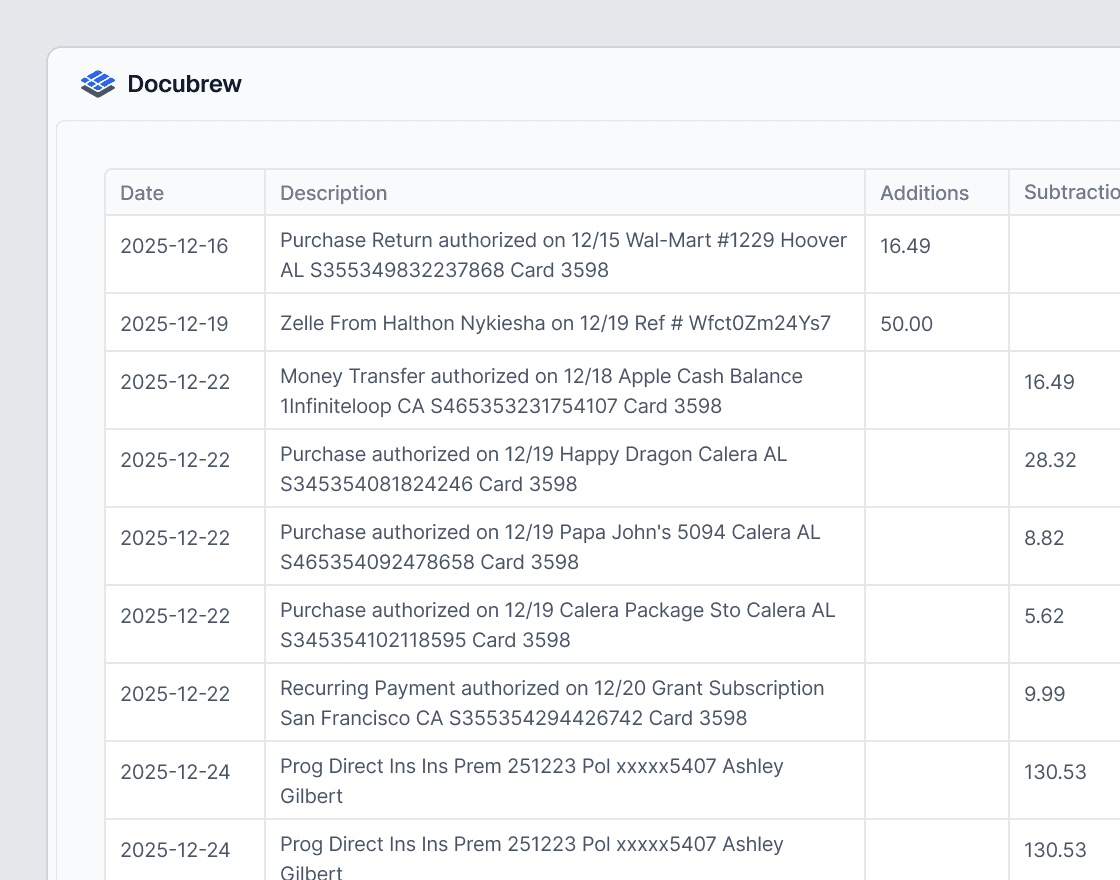
Image credit: docubrew.com
A bank statement converter can eliminate much of the repetitive work involved in that process. Docubrew automates the conversion of information of your bank statement into structured spreadsheet data.
When a PDF is deemed to be the missing piece
Imagine that a bookkeeper making an annual reconciliation for a client. The accounting system shows the most recent transactions, but a few older months were left out. Fortunately clients have downloaded the PDF of the previous statements.
It used to take hours of tedious copying into a spread sheet. The bank statement in PDF format to Excel workflow offers a viable alternative. Docubrew can extract transaction information from digital PDFs and scanned bank statements printed on paper.
Reduced manual transcription is an effective way to lower the possibility of making mistakes for professionals who must transfer bank statements to Excel on a regular basis.
Keep the Pages That Matter
Statements from banks don’t contain only transactions. A 12-page account statement may contain an introduction page, a account summary and disclosures or notifications along with a number of pages of actual banking activity.
Docubrew lets users preview the document and choose the pages that are relevant prior to conversion. This makes it easy to convert bank statement data to Excel without the need to include unrelated content.
Once processed, the resulting file can then be opened in Excel or created for use using accounting software such as QuickBooks, Xero, and FreshBooks.
CSV allows for a variety of accounting workflow
CSV is still in use because it is widely supported by databases, spreadsheets, and accounting applications. Docubrew will convert your bank statements to CSV using the transaction tables contained within the report.
This same workflow is utilized to transform bank statements to CSV for a number of purposes, including reconstructing the past, starting projects to clear clients’ data that has not been used, researching missing transactions or preparing the information for reconciliation.
Accounting firms that have to process multiple clients or statements simultaneously can benefit by batch processing.
Financial Documents deserve thought-out privacy safeguards
When it comes to processing financial records, efficiency is not the only consideration. Bank statements may contain sensitive client information Bookkeepers and accountants may also care about the place where they process.
Docubrew offers two alternatives. Windows desktop software is used to process files on the computer used by the user, and the statements do not need to be uploaded in order to be transformed. Users who prefer workflows using browsers can opt for the encrypted cloud option, in which uploaded files are deleted automatically after 24 hours.
This choice differentiates the platform from the bank statement Excel software that relies solely on remote processing.
Turning Document Archives Back Into Working Data
PDF statements are fantastic documents, but they’re not the most convenient for transactions that need to be reconciled, sorted, filtered, or imported elsewhere. Scanned files can pose problematic since transaction data might only exist as an image.
Docubrew is an effective program that combines OCR and statement parsing in order to convert scanned documents into usable financial information. This provides accountants bookkeepers and business owners the opportunity to convert archival financial documents into useful transactional data.
The result is a straightforward improvement to an otherwise tedious routine: preserve the bank statement as the initial financial record while turning its transaction table into information you can actually use.